Median price trend for houses
Based on 2 sales in the preceding 12 months
Down 17.9% over 12 months

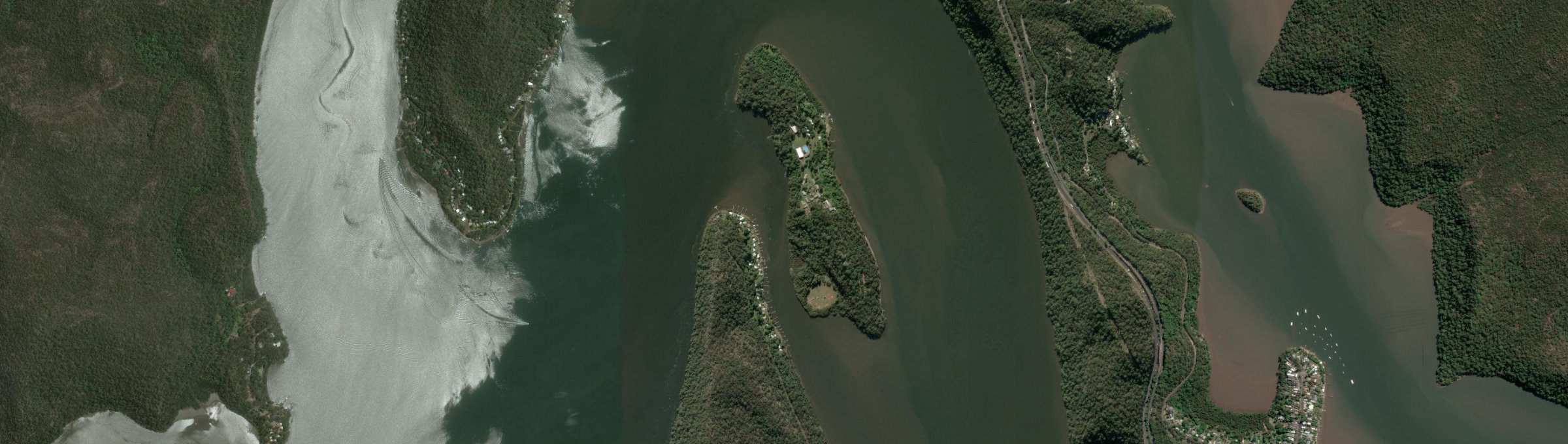
Aerial view
The quick read on
NSW 2083 · Hornsby
What homes cost, how rents have moved, and a feel for the people who call it home.
ABS 2021
Milsons Passage, New South Wales
Median sale price and rental income of properties in Milsons Passage NSW
Based on 2 sales in the preceding 12 months
Down 17.9% over 12 months
Market data updated May 2024.
Milsons Passage has a 12-month growth rate of -17.9% for houses.
Crime and safety
The overall rate for Milsons Passage is 1,129 offences per 100,000 residents — 67% below the Greater Sydney benchmark.
That is the clearest suburb-wide answer. Open the detailed profile to see how the pattern changes across offence types and different parts of Milsons Passage.
Overall crime rate
1,129
offences per 100,000 residents
67% belowGreater Sydney
Suburb-wide estimate from Microburbs' public crime model; it is not an address-level measure.
The people behind the postcode
Milsons Passage NSW 2083 is in New South Wales, within Greater Sydney.
32 people call Milsons Passage home, with an average of 2.2 people per household and a median household income of $949 a week.
Public ABS 2021 Census figures. The bars compare the local share with the capital-region benchmark.
Share of residents in each age band.
Share of occupied private dwellings.
Share of homes with a stated ownership or rental status.
Vehicles available to occupied households.
Selected ways residents worked or travelled on Census day.
66.7% of workers in Milsons Passage worked from home on Census day — noticeably more common than across Greater Sydney.
15.6% of Milsons Passage residents were born in England, about twice the rate across Greater Sydney.
34.4% of people in Milsons Passage described themselves as having no religion in the 2021 Census.
A closer look at the Census
Open any question for a plain-English reading of the public 2021 Census for Milsons Passage NSW 2083.
0.0% of Milsons Passage's residents were children under 15 in the 2021 Census. That is about half the Greater Sydney rate.
12 family households lived in Milsons Passage; 33.3% were couple families and 0.0% were one-parent families.
0.0% of local families included children under 15. That is about half the Greater Sydney rate.
These are suburb-wide household figures, not school or childcare ratings.
Milsons Passage had 32 residents at the 2021 Census.
0.0% of residents were aged 25 to 44.
84.4% were 55 or older. That is about twice the Greater Sydney rate.
Age shares use the suburb’s total Census population.
Separate houses made up 87.5% of occupied private dwellings in Milsons Passage.
Townhouses and other attached homes represented 0.0% of occupied private dwellings.
Flats and apartments accounted for 0.0% of occupied private dwellings.
All three shares use occupied private dwellings as the denominator.
61.5% of households with a stated tenure owned their home outright. That is about twice the Greater Sydney rate.
38.5% were buying their home with a mortgage.
0.0% rented their home. That is about half the Greater Sydney rate.
Tenure shares include households that stated one of these three arrangements.
The average household in Milsons Passage had 2.2 people.
One-person households made up 28.6% of occupied homes. That is somewhat above the Greater Sydney average.
Two-person households represented 71.4%, while 0.0% had four or more usual residents.
Household size counts usual residents in occupied homes.
66.7% of workers worked from home on Census day. That is well above the Greater Sydney average.
0.0% drove a car as their only travel method. That is about half the Greater Sydney rate.
0.0% used only a train, tram or bus, while 0.0% walked or cycled.
Travel figures are a 2021 Census-day snapshot.
0.0% of occupied households had no motor vehicle available. That is about half the Greater Sydney rate.
One-car households formed 71.4% of the total.
21.4% of households had two or more vehicles.
Vehicle counts refer to occupied households, not individual residents.
47.8% were at the same address five years earlier, while 52.2% reported a different address.
18.8% of residents were born outside Australia. That is about half the Greater Sydney rate.
Mobility figures cover residents who answered the relevant Census question.
81.3% of residents used only English at home.
0.0% used a language other than English at home.
0.0% spoke Mandarin at home, 0.0% spoke Cantonese and 0.0% spoke Hindi.
Home language is separate from English proficiency.
18.8% of Milsons Passage's population was born outside Australia, while roughly 81.3% was born in Australia.
0.0% of residents were born in China.
0.0% were born in India, while Australian citizenship across the whole suburb stood at 84.4%.
Birthplace, citizenship and ancestry describe different parts of identity.
English ancestry accounted for 43.8% of ancestry responses in Milsons Passage.
Australian ancestry made up 28.1% of responses.
Chinese ancestry represented 0.0% of responses.
People may nominate more than one ancestry, so these are shares of responses.
25.0% of employed residents worked in professional occupations. That is somewhat below the Greater Sydney average.
Managers accounted for 33.3% of employed residents, while clerical and administrative workers made up 33.3%.
Health care and social assistance employed 0.0% of workers, and education and training employed 25.0%.
Occupation and industry figures describe employed residents of the suburb.
The labour-force participation rate was 46.7%, compared with 60.0% across Greater Sydney.
25.0% of residents aged 15 and over worked full time, while 25.0% worked part time.
Unemployment was 7.1%, compared with 5.1% across Greater Sydney.
Labour-force figures come from the 2021 Census.
53.1% reported no selected long-term health condition.
0.0% reported a long-term mental health condition, including depression or anxiety.
18.8% reported asthma, 15.6% arthritis and 0.0% diabetes excluding gestational diabetes.
These are self-reported suburb-wide Census figures, not address-level health risks.
20.0% of people in the qualifications table held a bachelor degree. That is well below the Greater Sydney average.
Postgraduate degrees accounted for 15.0% of qualification responses.
Diploma-level qualifications represented 20.0%, while certificate-level qualifications represented 15.0%.
Qualification categories are reported separately and are not school ratings.
Median household income was $949 per week in the 2021 Census.
The median monthly mortgage repayment reported by local households was $1,950.
Occupied renting households reported a median rent of $0 per week.
These household figures are from 2021; current sale and asking-rent medians appear in the market section.
Working from home was 66.7% in Milsons Passage, compared with 38.9% across Greater Sydney.
Outright ownership was 61.5% locally and 28.6% across Greater Sydney. That is about twice the Greater Sydney rate.
Renting accounted for 0.0% in Milsons Passage, against 37.1% across Greater Sydney.
Capital-region comparisons use the same Census definitions and year.
Three useful questions
There is not yet enough consistent market data for a dependable house median. The nearby suburb links make it easier to compare the wider market while local observations build.
The Census counted 12 local families. That describes the community; school quality, travel times and the right fit for a particular family need separate research.
The free data does not have a dependable bedroom breakdown for this suburb. Compare the current house and unit medians above, then use live listings to see what a $1.5m budget buys today.
Medians describe recorded market activity across the suburb; they are historical context, not a valuation or forecast for an individual home.
Explore the area
Street-by-street reports are not published yet. The streets below are the ones this suburb covers.
Compare nearby suburb prices, rents and five-year market trends.
Keep exploring
Use the finders to compare places and properties, or open the full report when you need the street, risk, schools and growth research.
Figures update as new market and census data arrives. This suburb overview is general information, not a valuation or financial advice.